

Boxing, Muay Thai, kickboxing or MMA: which discipline?
of reading
The essentials: choosing a combat sport comes down to your goal. To start out and learn the basics, boxing is the most accessible. For the most complete self-defence, MMA and Muay Thai cover the widest range of situations. For conditioning and weight management, boxing and kickboxing are unbeatable. All of them can be practised recreationally, without ever fighting. This guide compares rules, contact, equipment and goals to help you decide.
Boxing, Muay Thai, kickboxing, MMA — and savate as well: combat sports have never been more popular, driven by self-defence, conditioning and confidence. But which one should you choose as a beginner? Each discipline has its own rules, intensity, equipment and ideal audience. Here is a clear comparison to find the one that suits you.
Combat sports compared
| Discipline | Weapons allowed | Ground / wrestling | Ideal for |
|---|---|---|---|
| Boxing | Fists only | No | Starting out, conditioning, hand technique |
| Savate (French boxing) | Fists and feet, in shoes | No | Technique, elegance, precision |
| Kickboxing | Fists and feet, including low kicks | No | Intense conditioning, all-round stand-up |
| Muay Thai | Fists, feet, knees, elbows and clinch | Standing clinch | The most complete striking |
| MMA | Striking, takedowns and submissions | Yes, wrestling and ground | The most complete fighting, self-defence |
Boxing: the ideal way in
Known as the noble art, boxing uses the fists only, above the belt. It is the most accessible discipline to start with: simple rules, minimal equipment, and clubs everywhere. You develop footwork, the ability to read an opponent, and hand technique that forms the base for every other discipline.
Excellent for conditioning and coordination, it can be practised recreationally as cardio boxing with no contact, or in competition. Basic kit: a pair of boxing gloves, hand wraps and a mouthguard.
Savate: the school of precision
An elegant French discipline, savate allows fists and feet, but kicks are delivered with the shoe — no shin, knee or elbow. In assaut format, contact is controlled rather than heavy: a very technical, aesthetic sport, ideal for anyone who values precision over pure impact. It requires specific shoes in addition to gloves and a mouthguard.
Kickboxing: the explosive hands-and-feet combination
Kickboxing adds kicks to boxing. Depending on the ruleset, K-1 in particular, it includes low kicks and sometimes knees. It is an extremely complete stand-up sport, highly valued for intense conditioning and energy expenditure. Richer than boxing, it remains more accessible than Muay Thai. Alongside gloves and a mouthguard, allow for shin guards.
Muay Thai: the art of eight limbs
Thai boxing is the most complete striking art: it allows fists, feet, knees and elbows, as well as the clinch. Hence its nickname, the art of eight limbs. Physically and technically demanding, Muay Thai is formidable for self-defence and builds complete stand-up fighters. Kit: gloves, shin guards, a mouthguard and a Muay Thai short.
MMA: total fighting
MMA, mixed martial arts, combines striking — boxing, Muay Thai, kickboxing — with grappling — wrestling, jiu-jitsu, submissions — both standing and on the ground. It is the most complete discipline and one of the most effective for self-defence, because it covers every range and every situation. In exchange, it is also the most demanding and technical. It is practised in open-finger MMA gloves, with a mouthguard and a groin guard, on matting suited to grappling.
Which discipline for your goal?
Our advice: start with one or two trial sessions at a club. The best combat sport is the one that makes you want to come back every week — the atmosphere of the gym and how you get on with the coach matter as much as the discipline itself.
The basic equipment to get started
Whichever discipline you choose, a few essentials protect your hands, your jaw and your partners from the very first session:
- ✓ A pair of gloves suited to the discipline — boxing, Muay Thai or MMA
- ✓ Hand wraps to protect the wrists and joints
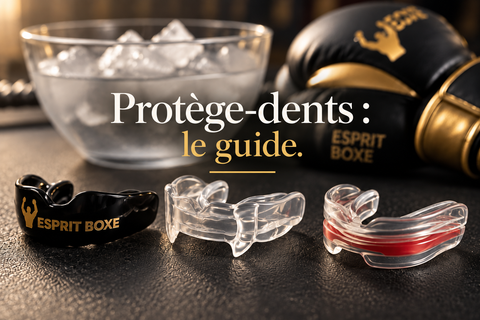
- ✓ A mouthguard as soon as sparring begins
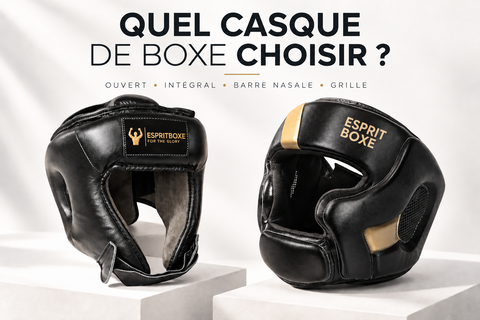
- ✓ Headgear for sparring safely
- ✓ Shin guards for kickboxing and Muay Thai
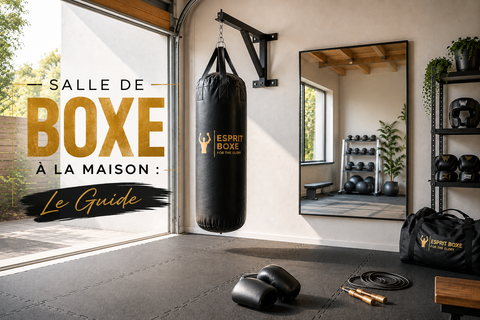
- ✓ A punching bag and a skipping rope to train at home
Kit yourself out at Esprit Boxe, whatever your discipline
Frequently asked questions
Which combat sport should a beginner choose?
Boxing is the most accessible to start with: simple rules, minimal kit — gloves, wraps, mouthguard — and clubs everywhere. Its hand technique forms the base for every other discipline. Kickboxing is a good alternative if you also want to work the legs.
Which combat discipline is the most complete?
MMA is the most complete overall, because it combines stand-up striking with ground fighting. For striking alone, it is Muay Thai, which allows fists, feet, knees, elbows and the clinch — hence its nickname, the art of eight limbs.
Which combat sport for self-defence?
MMA and Muay Thai are often cited as the most effective for self-defence, because they cover the most situations: striking, clinch and ground. Boxing remains very useful for distance management and reflexes. What matters most is regular practice with supervised sparring.
What is the difference between boxing and savate?
Boxing uses the fists only. Savate, French boxing, additionally allows kicks delivered with the shoe, with no shin or knee. Savate emphasises precision and technique rather than power.
Muay Thai or kickboxing: which should I choose?
Kickboxing, with fists and feet including low kicks, is more accessible and conditioning-focused. Muay Thai adds knees, elbows and the clinch: more complete and demanding, but also more technical. To start out, kickboxing is gentler; for complete striking, Muay Thai.
Can you practise a combat sport without ever fighting?
Yes. The vast majority of practitioners never step into a ring. Technical work, the bag, focus mitts, shadow boxing and cardio boxing let you progress, let off steam and build confidence with no contact at all.
The mouthguard deserves its own set of instructions. Our boxing mouthguard guide gives the exact temperature and immersion time, the mistakes that ruin a fit, the difference between single and double, and what to do if you wear braces.